Limitations of Temporary Email Services You Should Know
You've just discovered an exciting new online service and you're eager to sign up. But wait! You hesitate at the thought of your primary email getting bombarded with promotional emails, or worse, phishing attempts.
Enter the world of disposable email addresses and temporary email services—your knights in shining armor. They act as a buffer, keeping your personal email address clean and secure. However, as convenient as they are, it's important to understand the limitations of using temporary email solutions.
The Reality of Temporary Email Services
At first glance, temporary email services seem like a dream come true. They allow quick email verification without revealing your real email address. They are perfect for signing up for forums, newsletters, and free trials.
But these services come with notable drawbacks that users must consider before relying on them long-term.
Limited Functionality of Disposable Email Addresses
When comparing services like Guerrilla Mail to primary providers such as Yahoo Mail, the difference is clear. Temporary email services offer only basic inbox functionality.
Advanced features such as email search, folder organization, tagging, and filtering are usually missing, making them unsuitable for more complex usage.
Risk of Data Loss with Temporary Email Services
Disposable email inboxes are designed to be temporary by nature. Emails are automatically deleted after a set period of time.
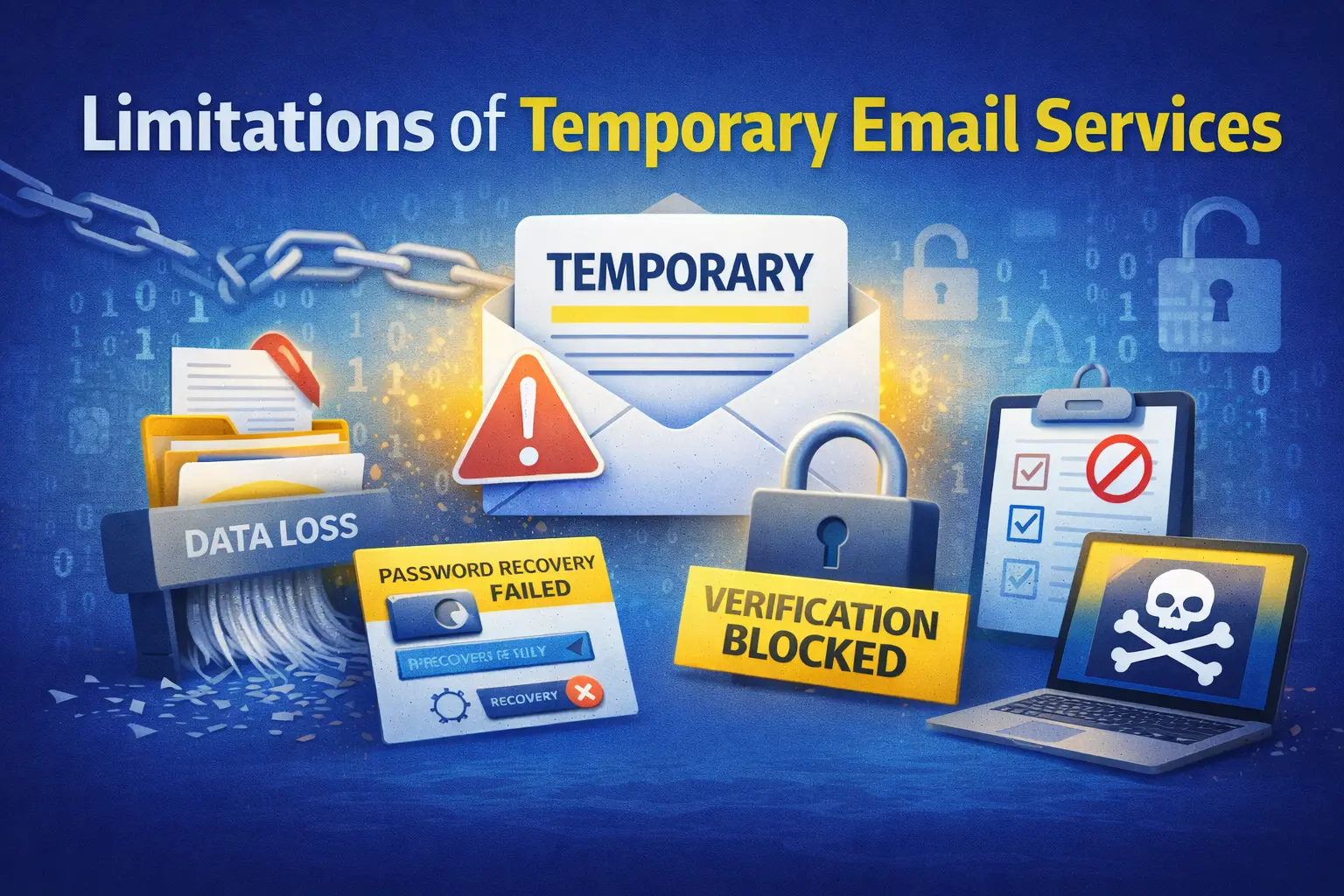
If important messages are sent to a temporary address, there is a high chance of permanent data loss.
Why Disposable Emails Fail for Password Recovery
Password recovery is one of the biggest weaknesses of disposable email usage. Most online platforms rely on email verification for account recovery.
If your temporary email address has expired, you may permanently lose access to your account. This makes disposable emails unsuitable for important services.
Lack of Advanced Spam Filtering in Temp Mail Services
Ironically, while disposable emails are used to avoid spam, they often lack effective spam filtering.
Unlike permanent email providers, temporary email services typically offer minimal filtering, leading to cluttered inboxes.
Limited Personalization in Temporary Email Inboxes
Most disposable email services offer a single inbox with no customization options.
Users cannot create folders, apply labels, or organize emails effectively, which reduces productivity.
Online Privacy Concerns with Disposable Email Providers
Not all temporary email services prioritize user privacy.
Some services may log IP addresses or lack strong encryption, potentially exposing users to privacy risks. Always review privacy policies before choosing a disposable email provider.
Not Suitable for All Email Verification Processes
Many modern platforms actively block disposable and temporary email domains.
Financial institutions, social networks, and secure platforms often require permanent, valid email addresses for verification.
Challenges Managing Multiple Accounts with Temporary Emails
Managing multiple online accounts using temporary email services can be frustrating.
Without organizational tools, inboxes quickly become confusing and inefficient. Primary email services handle multi-account management far better.
Why Disposable Emails Don’t Work for Email Marketing
Temporary email addresses are not suitable for receiving promotional emails or participating in email marketing campaigns.
Due to limited inbox lifespan and lack of organization, users may miss discounts, offers, and important announcements.
How FakeMail Solves Common Disposable Email Limitations
FakeMail distinguishes itself from traditional disposable email services by addressing many of these problems:
- Online Privacy: FakeMail prioritizes user privacy and protects personal data.
- Verification Compatibility: Designed to work with more online platforms.
- Multiple Account Management: Offers a more organized and user-friendly interface.
- Advanced Spam Filtering: Helps keep inboxes clean and usable.
While FakeMail is not a replacement for a permanent email address, it is a powerful and feature-rich option for temporary usage.
Why Choose FakeMail for Temporary Email Needs
Temporary emails can be incredibly useful when used correctly. They protect your inbox, reduce spam, and improve online privacy.
FakeMail combines the convenience of disposable emails with enhanced functionality, making it a smarter choice for temporary email use cases.
For long-term communication and account security, a primary email address remains essential. However, for short-term verification and privacy-focused usage, FakeMail stands out as a reliable solution.